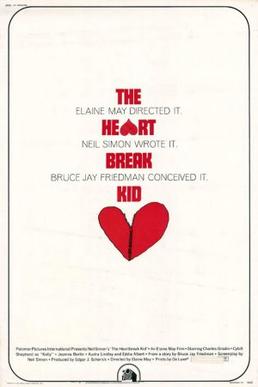
The Heartbreak Kid 1972: Lenny's Shocking Honeymoon Betrayal
Few films navigate the thorny landscape of love, ego, and disillusionment with the biting wit and unsettling accuracy of Elaine May's 1972 cinematic masterpiece, The Heartbreak Kid. Starring Charles Grodin as the irrepressible Lenny Cantrow, this black comedy plunges viewers into the immediate aftermath of a wedding, only to derail the traditional romantic narrative with a shocking act of betrayal on the honeymoon itself. Based on Bruce Jay Friedman's story "A Change of Plan" and masterfully adapted for the screen by Neil Simon, the film remains a timeless, if uncomfortable, exploration of human selfishness and the relentless pursuit of an idealized, often unattainable, partner.
The Ill-Fated Nuptials: A Premonition of Disaster
From its opening frames, The Heartbreak Kid 1972 signals that what we are witnessing is far from a fairytale romance. The wedding scene itself, set in a cramped living room, is a brilliant comedic and satirical stroke. Lila's parents, played with overbearing zeal by Audra Lindley and William Prince, are depicted as almost literally forcing their daughter down the aisle, clutching her arms as they navigate a maze of closely packed folding chairs. This visual metaphor perfectly encapsulates the suffocating nature of the nascent marriage and Lenny's impending entrapment.
The immediate descent into disillusionment begins on the drive to Miami Beach. Lenny, barely out of the wedding suit, starts to find Lila's "little idiosyncrasies maddening." Her penchant for smearing egg salad across her face while eating a sandwich, her repetitive singing of the same tunes, and the somewhat ominous revelation that she had "saved herself" for their wedding night all contribute to Lenny's rapidly growing unease. These seemingly minor quirks, magnified by his already shaky commitment, become insurmountable walls, signaling that this marriage might have been a mistake before it even truly began.
Honeymoon Betrayal: Lenny's Swift Change of Heart
The central betrayal of The Heartbreak Kid 1972 unfolds with a swiftness that is both hilarious and deeply unsettling. Arriving in Miami Beach, disaster, or perhaps serendipity from Lenny's perspective, strikes. Lila (Jeannie Berlin, in an Oscar-nominated performance) succumbs to a severe sunburn, confining her to their hotel room for three agonizing days, immersed in lotion and pain. For most newlyweds, this would be a moment of concern and tender care. For Lenny, however, it's an opportunity.
With Lila indisposed, Lenny seizes the chance to hit the beach alone. It's there, amidst the sun and sand, that he encounters Kelly Corcoran (Cybill Shepherd). Kelly is portrayed as a captivating "blond Nordic goddess" from Minnesota, a college student whose effortless beauty and self-assured demeanor immediately mesmerize Lenny. He falls "head over heels," convinced on the spot that this is "the real thing." The only inconvenient detail? He's a newlywed, still theoretically on his honeymoon with his sun-scorched bride upstairs. This audacious shift in affection, fueled by a potent mix of superficial attraction and profound self-delusion, forms the painful comedic core of the film.
Understanding Lenny Cantrow: A Portrait of Egotism and Acquisition
Charles Grodin's portrayal of Lenny Cantrow is a masterclass in making an utterly self-absorbed character compelling. Lenny is not merely a man who falls out of love; he is a man driven by a relentless, almost pathological, egotism and a desire for acquisition. As Roger Ebert astutely noted, the film is about "how we do violence to each other with our egos." Lenny's pursuit of Kelly isn't born of genuine affection or a deep connection; it's the chase of an inaccessible goal, a desire for an idealized trophy that he believes will complete him.
His prior marriage to Lila feels like a placeholder, perhaps entered into for conventional reasons or because she presented herself as an achievable, albeit not truly desired, target. His quick dismissal of her quirks and his immediate emotional abandonment highlight his shallow understanding of commitment and his profound lack of empathy. Lenny's journey isn't a search for love, but for validation and upward mobility, demonstrating how easily a person can rationalize cruelty in the name of personal fulfillment. To dive deeper into Lenny's complex motivations and Kelly's enigmatic charm, explore The Heartbreak Kid 1972: Unpacking Lenny's Egotism and Kelly's Allure.
Kelly Corcoran: More Than Just a "Blond Nordic Goddess"
While Lenny's pursuit of Kelly drives much of the narrative, Cybill Shepherd's portrayal imbues Kelly with a surprising depth that transcends the "dream girl" archetype. Kelly's beauty is undeniable, almost intimidating. She surrounds herself with "husky athletes" to carry her books and has a doting, wealthy father (played by an Oscar-nominated Eddie Albert) who is utterly helpless against her charm. She seems to treat men as a form of "mild amusement," twisting them around her little finger with casual indifference.
Yet, the film subtly hints at a deeper truth: Kelly, beneath her seemingly untouchable exterior, "hungers for love more, even, than Lenny." Her teasing and taunting of men might be a defense mechanism, a way to control interactions because she struggles to be seen as a living, accessible person rather than a beautiful object. The dynamic between Lenny and Kelly, therefore, becomes a tragic chase of illusions, where two individuals, each in their own way, are seeking something external to fill an internal void.
Cinematic Brilliance: Elaine May, Neil Simon, and the Ensemble Cast
The Heartbreak Kid 1972 owes its enduring legacy to the exceptional talent behind and in front of the camera. Director Elaine May demonstrates a "sure feeling for how comedy can edge over into satire and then tragedy," making audiences laugh uncomfortably as Lenny's self-serving journey unfolds. Her direction is sharp, observant, and unflinching, allowing the awkward silences and brutal honesty to land with maximum impact.
Neil Simon's screenplay is a masterclass in comedic writing, transforming Friedman's story into a narrative that is both "hurtful... funny, and still somewhat true." Simon's dialogue sparkles with wit, but it also carries the weight of Lenny's profound lack of self-awareness and the pain he inflicts. Cinematographer Owen Roizman expertly captures the contrasting moods, from the bright, superficial allure of Miami Beach to the quiet desperation in hotel rooms. Garry Sherman's musical score subtly underscores the film's comedic and dramatic beats.
The ensemble cast is phenomenal. Beyond Grodin's central performance and Shepherd's captivating presence, Jeannie Berlin's portrayal of Lila is heartbreakingly genuine, earning her an Academy Award nomination for Best Supporting Actress. Eddie Albert's role as Kelly's father also garnered an Oscar nomination for Best Actor in a Supporting Role. The film also received Golden Globe nominations for Charles Grodin (Best Actor in a Motion Picture – Comedy or Musical), Jeannie Berlin (Best Supporting Actress in a Motion Picture), and Neil Simon (Best Screenplay – Motion Picture). This recognition underscores the film's artistic merit and its impact on audiences and critics alike. For a deeper look into the film's blend of humor and poignant social commentary, read Elaine May's The Heartbreak Kid: A Hilarious & Hurtful Satire of Love.
Beyond the Laughter: Enduring Themes and Lessons from "The Heartbreak Kid"
More than five decades later, The Heartbreak Kid 1972 continues to resonate because its themes are timeless. The film is a powerful satire on the superficiality of desires, the illusion of the "perfect partner," and the endless cycle of dissatisfaction that can plague those who prioritize personal gratification over genuine connection. It's a stark reminder that true happiness doesn't come from acquiring the next shiny object or the most attractive person, but from self-awareness and authentic relationships.
The film provokes thought on several levels:
- The Dangers of Idealization: Lenny's immediate idealization of Kelly, mirroring his quick disillusionment with Lila, highlights the perils of projecting fantasies onto others.
- Ego-Driven Relationships: The movie serves as a cautionary tale about entering relationships for ego boosts, social status, or to fulfill external expectations rather than internal desires.
- The Cost of Selfishness: While Lenny might appear to "get what he wants," the film subtly suggests that his relentless pursuit will lead to a perpetual state of longing, never truly satisfied.
- Empathy's Absence: The film forces us to confront how a lack of empathy can enable profound acts of cruelty, even when dressed in comedic absurdity.
It teaches us that sometimes, the greatest heartbreak is self-inflicted, born from a failure to look inward before desperately seeking answers outside ourselves.
Conclusion
The Heartbreak Kid 1972: Lenny's Shocking Honeymoon Betrayal remains a groundbreaking and essential black comedy, a testament to the combined genius of Elaine May and Neil Simon. Through its uncomfortable humor and sharp observational wit, the film skewers the myths of romantic love and the self-serving nature of human desire. It's a brutal yet brilliant examination of a man convinced that his happiness lies just beyond the next horizon, forever chasing an elusive ideal. The film's legacy endures, prompting reflection on our own expectations of love, marriage, and the often-painful journey of self-discovery, making it a must-watch classic that continues to challenge and entertain audiences today.