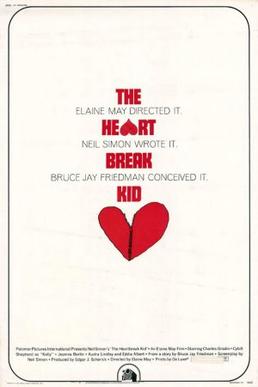
The Heartbreak Kid 1972: Unpacking Lenny's Egotism and Kelly's Allure
Elaine May’s 1972 cinematic masterpiece,
The Heartbreak Kid, remains a searingly funny yet profoundly uncomfortable satire on love, commitment, and the relentless pursuit of an idealized partner. At its core lies a character study of epic self-absorption: Charles Grodin’s Lenny Cantrow, a man whose journey from newlywed bliss to single-minded obsession unfolds with cringeworthy precision. This article delves into the depths of Lenny's rampant egotism and the irresistible, yet ultimately elusive, allure of Cybill Shepherd's Kelly Corcoran, dissecting how their collision forms the uncomfortable heart of this classic film. For more on the film's core conflict, check out
The Heartbreak Kid 1972: Lenny's Shocking Honeymoon Betrayal.
The Genesis of Disillusionment: Lenny's Rapid Descent
From the very opening scene, renowned screenwriter Neil Simon, adapting Bruce Jay Friedman's story "A Change of Plan," and director Elaine May set the stage for Lenny’s psychological unraveling. The wedding itself, with Lila's parents comically struggling to escort her down a makeshift aisle in their living room, hints at a marriage built on shaky foundations, perhaps more for external appearances or convenience than deep, abiding love.
The honeymoon to Miami Beach quickly devolves into a nightmare for Lenny, though one largely of his own making. His new bride, Lila Kolodny (brilliantly portrayed by Jeannie Berlin), becomes, in his increasingly critical eyes, a canvas for all her perceived flaws. Her endearing idiosyncrasies – the messy way she eats an egg salad sandwich, her repetitive singing, the somewhat ominous detail that she "saved herself" for their wedding night – transform into maddening irritants for Lenny. What a typical husband might overlook or even find charming, Lenny perceives as fundamental reasons for regret.
This rapid disillusionment isn't a flaw in Lila; it's a glaring symptom of Lenny's profound egotism. He isn't looking for a partner to share a life with; he's seeking an extension of his own aspirations, an ideal that can elevate his social standing and satisfy his restless desires. When Lila, confined to their hotel room with a severe sunburn, literally and figuratively fails to present this ideal, Lenny's internal monologue swiftly shifts from newlywed affection to active resentment. He's not just growing tired of her; he's actively searching for a way out, projecting his own dissatisfaction onto her unsuspecting shoulders. This willingness to discard a human being so quickly, merely days into their marriage, reveals a self-centeredness that is as alarming as it is darkly humorous.
Kelly Corcoran: The Siren of Miami Beach
Enter Kelly Corcoran, the "destiny" that Lenny encounters on the beach alone, sun-kissed and breathtakingly beautiful. Portrayed with an almost ethereal grace by Cybill Shepherd, Kelly is everything Lila is not in Lenny's superficial assessment: poised, sophisticated, effortlessly cool, and, crucially, seemingly out of his league. She is the "blond Nordic goddess from Minnesota," a vision of unattainable perfection.
Lenny is not just attracted; he is "thunderstruck with love," convinced that Kelly is the "real thing." This isn't genuine love, however, but rather an infatuation fueled by a potent cocktail of desire, ambition, and the thrill of the chase. Kelly represents the ultimate "inaccessible goal" for Lenny, a symbol of upward mobility and validation for his inflated ego. He sees her as the prize that will confirm his own worth, not as a complex individual.
Yet, Kelly herself is far from a one-dimensional character. Beneath her radiant exterior and a lifestyle supported by a doting, wealthy father (played by Oscar-nominated Eddie Albert), there are hints of her own complexities. Roger Ebert astutely observed that Kelly, in her inapproachability, resorts to "tease and taunt" as her primary interaction with men. She commands attention, carries herself with an air of entitlement, and seems to derive amusement from men's pursuit. Her detachment, a defense mechanism born from being constantly admired but rarely truly seen, suggests a deeper "hunger for love" than Lenny, in his self-absorption, is capable of recognizing or fulfilling. She is accustomed to twisting men around her little finger, making her the perfect, albeit dangerous, object for Lenny's acquisitive nature.
The Collision of Egos: A Satirical Masterclass
The Heartbreak Kid 1972 masterfully constructs a narrative where comedy edges into satire and then tragedy, as highlighted by Ebert. The film isn't merely about a man leaving his wife for another woman; it's a biting commentary on how "we do violence to each other with our egos." Lenny's pursuit of Kelly is less about profound emotional connection and more about acquisition – acquiring the most desirable partner, climbing the social ladder, and fulfilling his relentless desire for self-gratification.
Elaine May's direction is crucial in making this painful scenario palatable and even hilarious. She draws out performances that are both authentically human and utterly cringeworthy. Charles Grodin, nominated for a Golden Globe for Best Actor, embodies Lenny's blunt egotism and relentless desire with an unsettling sincerity. His unwavering belief in his own righteousness, even as he commits increasingly egregious acts, is the dark comedic engine of the film. Jeannie Berlin's Lila, nominated for both an Oscar and a Golden Globe for Best Supporting Actress, grounds the film in poignant reality, her vulnerability acting as a stark contrast to Lenny's brazen ambition. Cybill Shepherd’s Kelly, meanwhile, perfects the art of captivating aloofness, making her both an object of desire and a mirror reflecting Lenny’s superficiality. For a deeper dive into the film's comedic and hurtful elements, consider
Elaine May's The Heartbreak Kid: A Hilarious & Hurtful Satire of Love.
The film's genius lies in its ability to make us laugh while simultaneously feeling deeply uncomfortable. It forces the audience to confront the darker aspects of human nature: the selfishness that can masquerade as love, the superficiality that drives many romantic pursuits, and the casual cruelty inflicted by unchecked ego. Neil Simon's Golden Globe-nominated screenplay brilliantly captures the absurd dialogue and escalating tension, while Owen Roizman's cinematography and Garry Sherman's score subtly enhance the film's bittersweet tone.
Enduring Legacy and Timeless Commentary
Decades after its release,
The Heartbreak Kid 1972 continues to resonate because its themes are timeless. Lenny's brand of egotism, his restless dissatisfaction, and his pursuit of what he perceives as a "better" option speak to anxieties and desires that persist in modern relationships.
The film serves as a cautionary tale, offering valuable insights into the pitfalls of:
- Superficial Attraction: Lenny's initial infatuation with Kelly is based almost entirely on her appearance and the prestige she represents, rather than genuine compatibility or emotional depth.
- Unchecked Narcissism: Lenny’s inability to empathize with Lila or consider the repercussions of his actions highlights how extreme self-focus can destroy relationships and leave a trail of hurt.
- The Illusion of "The One": Lenny's conviction that Kelly is his "real thing" after only a few interactions reveals a dangerous idealization that overlooks the complexities of real love and commitment.
- Acquisition vs. Connection: The film subtly critiques a consumerist approach to relationships, where partners are viewed as possessions or status symbols to be upgraded.
Through its unflinching portrayal of Lenny and Kelly, the film encourages viewers to reflect on their own motivations in love and to distinguish between genuine connection and the often-deceptive allure of perceived perfection. It's a testament to the combined genius of Elaine May, Neil Simon, and Bruce Jay Friedman that such a "hurtful" story can remain so profoundly funny and insightful.
In conclusion,
The Heartbreak Kid 1972 is far more than a simple romantic comedy. It’s a masterful satirical examination of human ego, desire, and the often-painful realities of romantic pursuit. Lenny Cantrow's colossal egotism, clashing with the tantalizing yet complex allure of Kelly Corcoran, creates a narrative that is both hilarious and heartbreaking. This film challenges us to look beyond surface attractions and confront the true nature of commitment and self-awareness in our own quests for love.